The History of Creeping Bellflower
The History of Creeping Bellflower in Minnesota
How one garden escape turned into a neighborhood menace
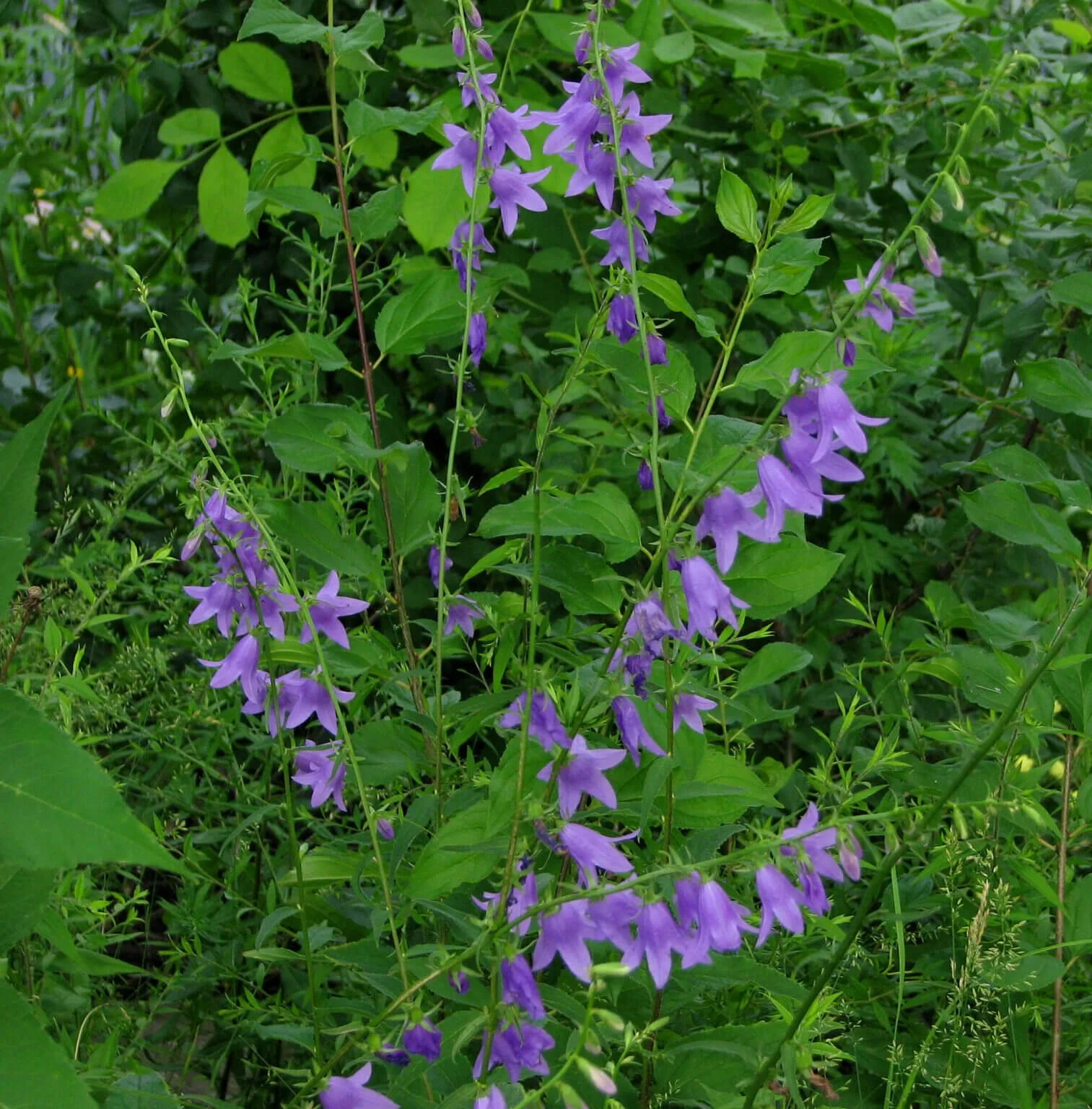
Creeping Bellflower (Campanula rapunculoides) might look delicate with its purple, nodding flowers, but it’s one of the most aggressive and persistent weeds in Minnesota.
Where it came from
Native to parts of Central/Eastern Europe & Western Asia, Creeping Bellflower was first brought to North America in the 1800s as a garden ornamental. Early settlers valued it for its showy blooms, edible leaves and roots, as well as its ability to survive tough conditions, especially cold winters. By the late 19th century, it had already escaped cultivation and was spreading on its own across several states and provinces.
“Campanula rapunculoides was introduced to North America from Europe and Asia, likely as an ornamental and/or accidental contaminant in seed or soil imports.”
— USDA Plant Guide; Minnesota Wildflowers
Where it got its name
Creeping Bellflower is part of the Campanulaceae plant family, and gets its Latin genus name, Campanula, from its “small bell” shaped flower. The specific epithet rapunculoides refers to its similarity to Rampion Wellflower, C. rapunculus, so named for that plant’s large root and its similarity in taste and shape to the turnip, “rapa" in Latin. The “creeping” in the common name comes from its habit to extend its rhizomes underground and “creep” out from where it was originally planted.
How it spread so far
Creeping Bellflower’s invasion across Minnesota wasn’t natural – people have been helping. It was sold in nurseries for decades, often misidentified as “Bluebell” or grouped with other Campanulas. It was also passed between gardeners who didn’t realize what they were sharing, and has spread property to property naturally by wind or unintentionally by landscaping. Contaminated topsoil, mulch, and potted plants have further accelerated its spread.
“This plant is still sometimes available through nurseries, despite its invasive nature. Once introduced, it is extremely difficult to eradicate.”
— Minnesota Wildflowers
Where it’s a problem
The worst infestations are now found in residential neighborhoods and urban gardens. Common hotspots include:
Boulevard strips and curb lawns
Hostas, daylily, and iris plantings
Woodland edges and shade gardens
Neglected or unmaintained beds
In Minnesota, Creeping Bellflower is especially common in Minneapolis, St. Paul, Duluth, Stillwater, and nearby suburbs. Once it appears, it often spreads to multiple neighboring yards within a single season.
We need to act NOW to keep it out of our parks. Although some in Minnesota are already overtaken by Bellflower and cannot likely be saved, the majority of our parks are not lost yet.
Why it thrives in Minnesota
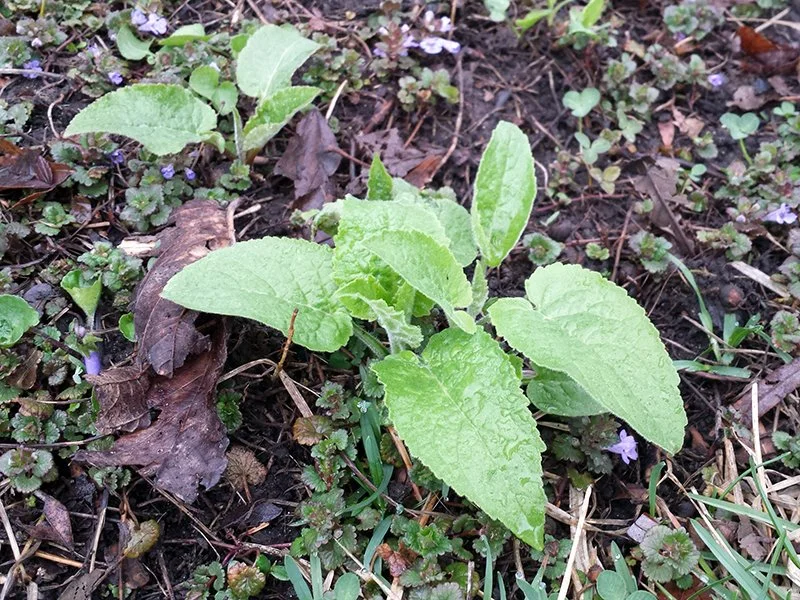
Minnesota’s soil, moisture, and temperature conditions are almost perfectly suited for Creeping Bellflower. It spreads both by seed and underground rhizomes, making it one of the most difficult weeds to remove once established. Bellflower is also invasive and problematic in Wisconsin, Montana, Oregon, the Northeast, and almost all of Canada.
Key reasons it does so well in the Upper Midwest:
Survives deep freezes through thick, fleshy roots
Grows in both shade and full sun
Seeds heavily and spreads underground
Forms dense mats that outcompete perennials and natives
Lacks natural predators that keep it in check in its native environment
“This species (unlike most weeds) is both rhizomatous and self-seeding, enabling it to rapidly colonize large areas.”
— Invasive Species Council of British Columbia
Each flower stalk can produce up to 15,000 seeds, and even small root fragments can regrow if disturbed.
What other plants it looks like
C. rapunculoides is a perennial shade-tolerant plant with purple flowers, both a basal and flowering form and are insect-polinated. Turns out, so is our native Big-leaf Aster (Eurybia macrophyllum), and close is our native American Bellflower (Campanulastrum americanum, biennial), as well as purple violets (Viola spp.).
Below is a guide to relatives, lookalikes, & competitor plants of Creeping Bellflower present in Minnesota:
Peach-Leaf, Willow Bellflower (Campanula persicifolia)
Common garden variety, lookalike, & relative
Erect perennial with large purple bell shaped flowers
Also a Eurasian native, not invasive
American Bellflower (Campanulastrum americanum)
Strong lookalike from a distance
Biennial rather than perennial
Purple flower with unfused petal arranged in a dish rather than a bell
Very similar habitat requirements
Bristly Bellflower (Campanula cervicaria) & Clustered Bellflower (C. glomerata)
Hairy lookalike relative naturalized to Duluth area
Marsh Bellflower (Campanula aparinoides)
Small white-flowered native relative in wetlands throughout Minnesota
Harebell (Campanula rotundifolia)
Narrow-leaved native relative growing in harsh sites such as rocky sunny bluffs
Violets (Viola spp.) & Creeping Charlie (Glechoma hederacea)
Lookalikes by basal leaves & flower color, especially in lawns
Bluebells (Mertensia spp.)
Lookalikes by leaves and fuses, bell-shaped flower heads
Distinct by untoothed leaf, blue flower color, & earlier bloom time (May-June)
Large-leaved Aster (Eurybia macrophylla)
Competitor in gardens & natural areas due to similar niche aesthetically & ecologically
Jewelweeds/Touch me Nots (Impatiens spp.)
Potential competitor in gardens & natural areas